


October 13, 2026
Why are Viennese chairs so light and strong? We explain how solid beech is bent with steam – from the chamber to the finished chair.
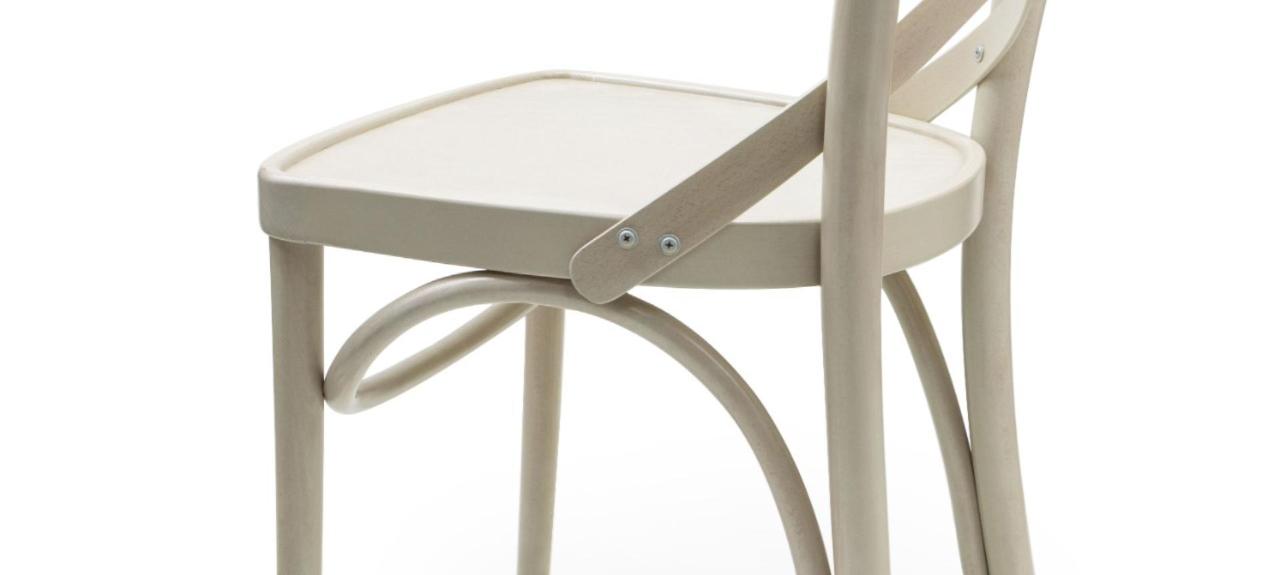
The Viennese chair is one of the most recognisable objects in the history of furniture. Its secret is not ornament but a simple idea: instead of cutting the wood along a curve, you bend it with steam. The result is a light, flexible and remarkably strong frame that still stands in cafés, restaurants and homes all over the world.
Where the technique comes from
Steam-bending solid wood became popular in 19th-century Vienna, where cabinetmaker Michael Thonet turned it into an industrial process. His chair No. 14 from 1859 was produced in the millions and is still considered a model of good design – few parts, little material, maximum strength. It is also where the name “Viennese chair” comes from.
In Troyan, the woodworking tradition has been alive for generations. In 1946 local craftsmen founded the STOL cooperative, and today Mebel.bg / Elimex carries the craft forward in its workshops in Troyan and Bansko.
Why beech?
Not every timber can be bent. Beech performs best – long, even fibres, good elasticity and few knots. That is why classic Viennese chairs are almost always solid beech. Parts are selected carefully: wood with a sloping grain or cracks would break during bending.
How the wood is bent – step by step
- Preparation. Blanks are cut and turned to the required section, leaving a small allowance for final machining.
- Steam. The parts go into a hot steam chamber. Heat and moisture soften the lignin – the “glue” between the fibres – and the wood becomes pliable. The time depends on the thickness of the part.
- Bending on a form. While still hot, the wood is bent around a metal form. A steel strap on the outside takes the tension and keeps the fibres from tearing.
- Setting and drying. The part stays clamped in the form and is dried in drying chambers until the moisture drops and the wood “remembers” its new shape.
- Machining and assembly. Then come sanding, drilling, assembly and finishing – stain, lacquer or oil, as the client chooses.
The advantages
- Strength. When bent, the fibres follow the shape instead of being cut through, so a bent part is stronger than one cut to a curve.
- Lightness. Slim bent elements make the chair light and easy to move – important for venues.
- Less waste. A whole part is bent, instead of cutting the curve out of a wide board.
- Long life. A well-made Viennese chair can be repaired and serve for decades.
The Viennese chair today
The technique is old, but not outdated. Bent parts appear in many contemporary models – from classic Viennese chairs to Scandinavian designs such as the Slit chair. If you are looking for chairs for a restaurant, café or home that combine tradition and durability, get in touch – we will help you choose the model, wood and finish.